


Muscle Pain
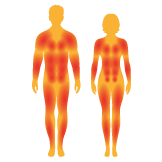
Muscle pain (or “myalgia”) is a localised or generalised physical pain that comes from striated muscles (the muscles that sit on the bones and skin and facilitate our movements and reactions)..
Muscle pain can be caused by intense exercise, a fall, injury or illness (such as the flu). It is most commonly caused by tension, stress or by overusing our muscles. It is common when starting a new activity, increasing the duration or intensity of a regular activity, or when performing highly repetitive movements.
This kind of pain, which most often affects the neck, limbs, lower back, thighs and calves, can come in various forms – such as a sprain, strain, cramp, muscle soreness, a stiff neck and so on. Acute muscle pain is usually temporary, unlike arthritic pain.
Joint Pain
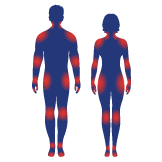
Physical pain that may affect one or more joints in the body. This can be caused by various factors, including overusing the joints, arthritis, natural age-related wear and tear, injuries and trauma.
It manifests itself in different ways, depending on the underlying cause: some pains (and discomforts) are acute and occur suddenly, while others are chronic and persist for a long time. The pain (and discomfort) may be localised or generalised, and may manifest as stiffness, swelling, redness or heat around the affected joint.
Joint pain (and discomfort) can be particularly inconvenient when it affects important joints such as the knees, hips, shoulders and wrists. It can also impede normal mobility and movement, which can limit daily activities and reduce overall quality of life.
As with muscle pain, regular exercise can help prevent joint pain (and discomfort) by strengthening the muscles that support the joints. Treatment for joint pain can vary depending on the underlying cause and may include medication, physical therapy and lifestyle changes.

Headaches: migraines and headaches
The causes of headaches are varied and most often benign. There are two main types of headaches: tension headaches and migraines.
Tension headaches are a common type of prolonged headache which affects 20–40% of adults. Main symptoms:
- continuous, moderate and diffuse, non-throbbing pain, with a bilateral pressure on the skull;
- does not come with nausea or vomiting;
- does not get worse with exertion;
- gets worse in times of stress;
- pain comes with a feeling of emptiness in the head and difficulty concentrating or, on the contrary, heaviness in the head;
- often associated with anxiety and contracted neck muscles.
In adults, tension headaches tend to occur at the end of the day. It is often due to stress, tiredness, psychological tension, and is sometimes associated with actual migraine attacks.
Migraines can affect everyone, to varying degrees. About 15% of adults are affected, predominantly women (20% of women are affected, compared to just 10% of men).
Migraines can have a significant effect on daily life.
People with migraines may have difficulty performing daily tasks, working, studying or socialising. Intense headaches can cause debilitating pain, often requiring rest and isolation in a quiet, dark environment. Associated symptoms, such as nausea and sensitivity to light, can make normal activities extremely uncomfortable and even impossible during a migraine attack.
Circulatory Discomfort
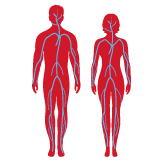
This is a form of discomfort that results from impaired blood flow in the body. Circulatory discomfort can arise when blood vessels narrow or block, restricting blood flow in certain parts of the body. This can be caused by a variety of factors, including age, heart disease, diabetes, high blood pressure or pregnancy.
It can be localised or generalised, and can manifest as cramps, stabbing pain or burning in the legs, arms, hands or feet. Circulatory discomfort may also be associated with other sensations such as numbness or tingling in the affected limbs. It can also lead to decreased muscle strength and mobility, which can limit daily activities and reduce overall quality of life.

Throat Irritation
Throat irritation is an unpleasant burning or itching sensation in the throat. It can be caused by many factors, including allergies, respiratory infections, dry air, pollution and smoking.
Common symptoms of throat irritation include pain or burning in the throat, a dry cough, headache and difficulty swallowing.
Throat irritation can be prevented with a few healthy habits, such as maintaining sufficient humidity in the air, avoiding cigarette smoke and limiting exposure to air pollution.
In more severe cases, medical treatments such as antibiotics or corticosteroids may be required to treat throat irritation. It is important to seek medical advice if symptoms persist or worsen, or if symptoms such as fever or chest pain appear.